
As an Amazon Associate I earn from qualifying purchases.


Note: This post has been updated to provide more details on cook timing, temperature, and size of the prime rib. I've also included some delicious and popular rubs to try. This recipe has been tested dozens of times, because consistency has been one of the hardest things to get right, but we've got it!
If you want a perfect prime rib, you’re exactly where you need to be. This roast looks intimidating because it’s expensive and dramatic, but honestly, once you understand time, temperature, and resting, it’s one of the easiest special-occasion meals you can make. I’ve tested every method under the sun, including a few that absolutely should not have worked but I tried them anyway. After all that, two methods stand out as reliable, delicious, and totally doable at home: the reverse sear, and the classic high-heat start followed by a slow roast. Both give you a beautiful crust, a juicy center, and that restaurant-level moment when you slice it open and everyone gasps (literally. I recently made this for a party and that's what happened).
We’ll go through both methods in detail, plus realistic timing charts, temperature guidelines, safe crust and rub options, and the things I tested that absolutely didn’t deserve to make it out of the kitchen (including one that surprised me!). Let’s get into it.

Prime rib is one of of those show-stoppers for your table, which makes it perfect for the holidays. This has been my family's go-to for Christmas since we figured out that turkey is like the worst possible option (don't @ me. It's fine, but there are so many better options).
Learning how to cook prime rib isn't super difficult. There's a couple of key tips and tricks along the way, and once you've nailed that, you're going to be good to go.
So, buckle in because we're going to do this step-by-step to ensure this turns out perfect for you every time.
Check out the web story here.
Jump to:
Frequently asked Questions
Prime rib is at its best around medium-rare. Aim for 125°F final for rare, 130–135°F for medium-rare, and 140–145°F if you like a little less pink. Always pull the roast 5–10°F before your target temperature because carryover heat finishes the work while it rests.
Reverse sear takes about 30–35 minutes per pound at 225°F. The classic roast starts with 15 minutes at 500°F, then cooks at 225°F for 15–20 minutes per pound. Both rely on a thermometer, not a clock.
Plan on one pound per person for bone-in roasts. If you’re serving a ton of sides, half a pound sometimes works.
Same primal cut. Prime rib is the whole roast. Ribeye is the steak version cut from that roast.

Why You're Going to Love this Recipe
- In my opinion, this is straight up one of the most crowd-pleasing, show-stopping entrees out there. There will be no one at your table who isn't impressed with this dish.
- It actually is easy, I promise. I do understand it can be intimidating. This is an expensive cut of meat, and if you overcook it - it's not great. But that's not going to happen, so don't worry.
- It's perfect for the holidays.
- It makes the best beef gravy EVER. But you don't even have to make the gravy, you can also serve it with a simple au jus made from pan drippings.
What is Prime Rib?
Prime rib is an amazing cut of roast beef that comes from the beef rib primal cut. It's usually roasted with the bone-in (which is 100% how I recommend it, the flavor is just phenomenal).
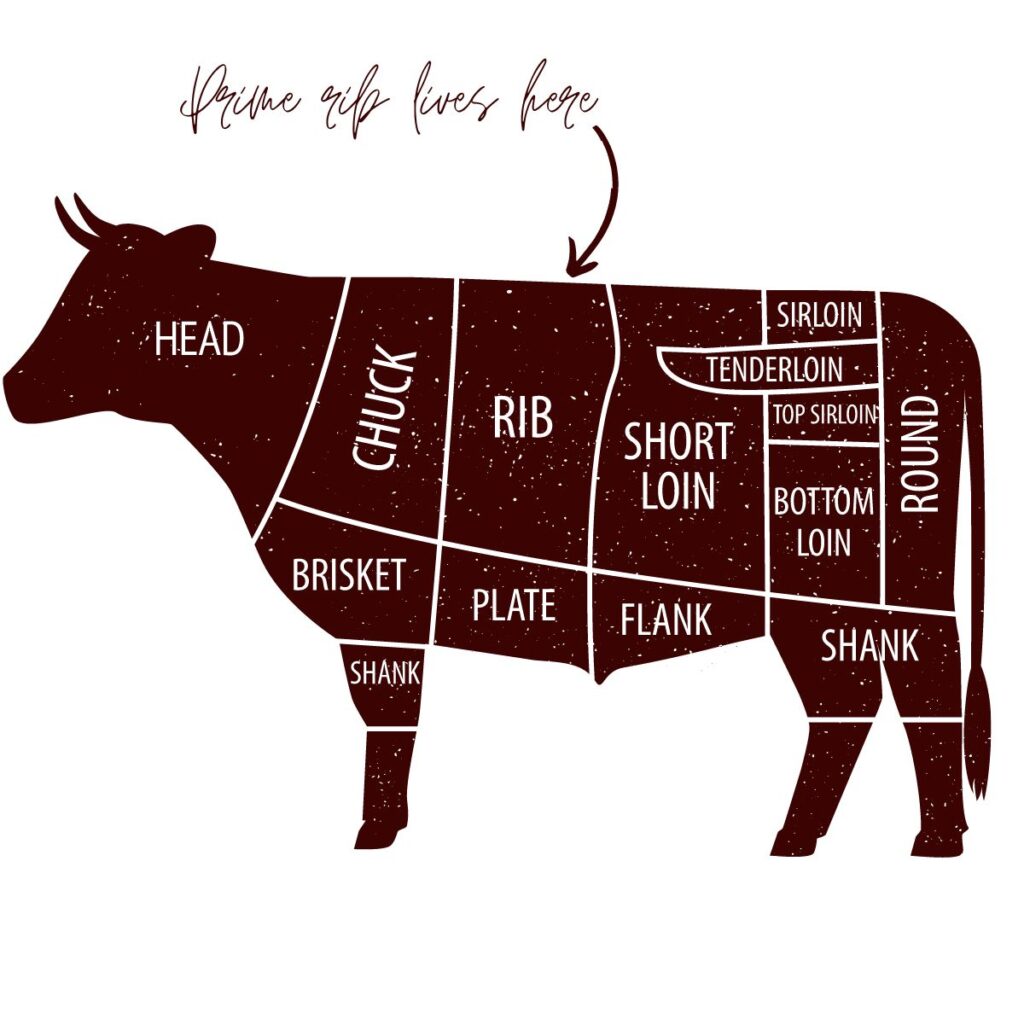
The word prime actually comes from the grade, or the designation of the steak. Typically to be labelled as prime, there has to be a good amount of fat and marbling in the meat itself. More fat = more flavor.
The other thing that's taken into consideration is the age of the cow. Usually, younger cows provide more tender meat, so prime rib often comes from cows that are less that 2.5 years old.
If the meat doesn't meet the criteria, then it's called standing rib roast, or a rib-eye roast.
Ingredients
The ingredients for prime rib are incredibly simple. I love just rubbing it with salt and pepper, but you can also use your favorite steak rub. There are a few suggestions for variations later on in this post. But for now, let's keep it simple.
Here's what you need:
- Bone-in prime rib
- Olive oil
- Salt
- Pepper

Internal Cooking Temperature
Here's the temperatures you're looking for at all levels of doneness:
Rare: 125°F
Medium-Rare: 135°F
Medium: 145°F
Medium-Well: 150°F
Well-Done: 160°F
Note: it's extremely important you take the roast out of the oven BEFORE the temperature hits whatever doneness you're looking for. I typically take mine out of the oven at 112F for rare. The meat will continue to cook while it's resting, and you definitely end up 10 degrees hotter by the end.
| Doneness Level | Remove from Oven At (°F / °C) | Final Internal Temperature (°F / °C) |
|---|---|---|
| Rare | 115–120°F (46–49°C) | 125°F (52°C) |
| Medium Rare | 120–125°F (49–52°C) | 130–135°F (54–57°C) |
| Medium | 130–135°F (54–57°C) | 140–145°F (60–63°C) |
| Medium Well | 140–145°F (60–63°C) | 150°F (66°C) |
| Well Done | 150°F and above (66°C+) | 160°F and above (71°C+) |
Note: I have a whole post on getting the internal temperature of beef right. Check it out here for my best tips and tricks.
Method One: Reverse Sear
This method gives perfect edge-to-edge pink with no grey ring. It’s steady, controlled, and almost impossible to overcook. The only draw back is it takes longer to cook, so be patient.
Season the roast generously with salt and pepper. If you have time, refrigerate it uncovered overnight to dry out the surface for a better crust.
Take the roast out of the refrigerator an hour before it goes in the oven. Letting the meet come up to room temp will give you more control over the final outcome.
When ready to cook, heat the oven to 225°F. Place the roast bone-side down on a rack and insert a thermometer into the thickest part, avoiding the bone. Roast until the internal temperature reaches your pull temperature. This usually takes 30–35 minutes per pound, but always start checking early.
Once it hits the target, remove the roast and rest it for 30–45 minutes. This step is key for juicy slices and helps the crust form later. While it rests, heat the oven to 500°F. Brush the roast with butter or your rub, especially if it includes garlic paste or roasted garlic. This timing prevents garlic from burning. Place the roast back into the oven for 10–15 minutes until the crust is deep golden. Rest for another 10 minutes, then carve and serve.
Instead of putting the prime rib back in the oven, you can also sear it off in a cast iron skillet until the the outside is crusty, brown, and delicious.


Timing Guide
| Prime Rib Weight | Approx. Time at 225°F (°C) | Start Checking Internal Temp At |
|---|---|---|
| 3 lb (1.4 kg) | 1.5–1.75 hours (68–79°C oven) | 1 hour 15 minutes |
| 4 lb (1.8 kg) | 2–2.25 hours (68–79°C oven) | 1 hour 45 minutes |
| 5 lb (2.3 kg) | 2.5–3 hours (68–79°C oven) | 2 hours 15 minutes |
| 6 lb (2.7 kg) | 3–3.5 hours (68–79°C oven) | 2 hours 45 minutes |
| 7 lb (3.2 kg) | 3.5–4 hours (68–79°C oven) | 3 hours 15 minutes |
Method Two: Classic Roast (My Personal Favorite)
This version gives you a faster, dramatic crust and a gentle, even cook inside. It’s a great option when you want that bold beginning without risking dryness. To be honest, this came out better than expected during testing. The reverse-sear method edged it out slightly, but not enough to make up for the extra work and time.
Heat the oven to 500°F. Season the roast generously.
If you’re using garlic, make sure it’s roasted or mashed into a paste. Raw minced garlic burns too quickly at high heat.
Place the roast bone-side down and roast at 500°F for 15 minutes to build the crust.
Reduce the oven to 225°F and continue roasting for 15–20 minutes per pound. Use your thermometer and pull the roast at 120°F for medium-rare. Rest for at least 20 minutes before slicing.


| Prime Rib Weight | Time at 225°F After 15 min at 500°F | Pull Temp (°F / °C) | Final Temp (°F / °C) |
|---|---|---|---|
| 3 lb (1.4 kg) | 45–60 minutes | 120°F (49°C) | 130°F (54°C) |
| 4 lb (1.8 kg) | 60–75 minutes | 120°F (49°C) | 130°F (54°C) |
| 5 lb (2.3 kg) | 75–105 minutes | 120°F (49°C) | 130°F (54°C) |
| 6 lb (2.7 kg) | 105–120 minutes | 120°F (49°C) | 130°F (54°C) |
| 7 lb (3.2 kg) | 120–145 minutes | 120°F (49°C) | 130°F (54°C) |
Flavor Rub Variations
These rubs stay safe at high heat, and the garlic options are designed to avoid burning. Any rub with fresh garlic, garlic paste, or butter should go on after the high-heat phase of the classic roast. Garlic powder is the only garlic that can handle 500°F without turning bitter.
Garlic & Herb Rub
- 2–3 tablespoon softened butter or olive oil
- 1 teaspoon garlic powder
- 1 tablespoon chopped rosemary
- 1 tablespoon chopped thyme
- Salt and pepper to taste
When to use it:
- Safe at any temperature.
- Classic roast: You can apply this before the 500°F stage because garlic powder won’t burn the way fresh garlic does.
- Reverse sear: Apply whenever you want — before slow roasting or before the final sear.
Peppercorn & Horseradish Butter
- 2 tablespoon cracked black pepper
- 1 tablespoon prepared horseradish
- 2 tablespoon softened butter
- ½ teaspoon salt
When to use it:
- Works with either method.
- Add at the start for classic roast or before the final sear for reverse sear.
Steakhouse Dry Rub
- 1 tablespoon kosher salt
- 1 tablespoon coarse black pepper
- ½ teaspoon garlic powder
- ½ teaspoon onion powder
- ½ teaspoon smoked paprika
When to use it:
- Safe to apply at the very beginning of either method.
- This rub can go through the full 500°F stage with no issues.
Rub Variation Chart:
| Rub Variation | Heat-Safe? | When to Apply (Classic Roast) | When to Apply (Reverse Sear) |
|---|---|---|---|
| Garlic Powder Herb Rub | Yes — garlic powder is high-heat safe | Apply before the 500°F stage or anytime after | Apply before roasting or before final sear |
| Peppercorn + Horseradish Butter | Yes — no fresh garlic | Apply at the start or after the 500°F stage | Apply before the final sear for best crust |
| Steakhouse Dry Rub | Yes — fully high-heat safe | Apply at the very beginning | Apply before slow roasting |
Common Mistakes and How to Fix Them
Mistake: Not using a thermometer
Prime rib is too expensive to guess with. Time per pound helps, but only the thermometer tells the truth.
Mistake: Slicing too early
The roast needs time to relax. Cutting too soon pushes the juices out and dries the meat fast.
Mistake: Cooking at high heat for too long
This builds a thick grey band. Use high heat only for the crust stage, not the full cook. This also happens with the sear in a skillet first, then in the oven method (which is why I stopped doing it).
Mistake: Letting garlic burn
Fresh minced garlic struggles to handle high heat. Use garlic paste, roasted garlic, or garlic powder instead.
Mistake: Undersalting the roast
Big cuts need more salt than you think. Light seasoning leads to flat flavor, even with a perfect cook. This is a common problem with most cuts of beef - if you're wondering why it doesn't taste like restaurant quality, start by adding more salt.
Mistake: Not drying the roast first
A wet surface won’t brown well. Pat it dry or chill it uncovered overnight for a better crust.
Mistake: Ignoring carryover heat
The roast keeps cooking while it rests. Pull it 5–10°F early to avoid overshooting your target.
Mistake: Hitting bone with the thermometer
This gives a false reading and leads to overcooking. Aim for the thickest part of the center instead.
Mistake: Skipping the mid-rest during reverse sear
The rest between the low cook and final sear is essential. It helps the crust form and protects the interior.
Mistake: Roasting without a rack
The bottom cooks unevenly and can steam. A rack, or bone-side down, keeps airflow even, and gives a great 360 degree crust.
What to Serve with It
I've made this meal so times over the years - so I know my way around how to serve it. First up, you want a beautiful bottle of full-bodied Barolo or Cabernet Sauvignon.
Serve it alongside Brussel's sprouts with bacon, classic green bean casserole, and Boursin mashed potatoes.
This is also a great meal to pair with gravy and Yorkshire pudding, if you're feeling ambitious! I think it would also be amazing with this mushroom sauce, if you want something a little different.
Other Impressive Entrees
You must use the category name, not a URL, in the category field.📖 Recipe
How to Cook Prime Rib
Equipment
- Roasting pan with rack
- Instant-read thermometer
Ingredients
- 1 5 lb prime rib roast bone-in
- 2 tbps salt
- 1 teaspoon pepper
- 2 tablespoon olive oil
Instructions
Method One: Reverse Sear
- Salt and pepper the roast generously. If you can, dry-brine it in the fridge overnight.
- Heat oven to 225°F. Place the roast bone-side down on a rack. Use a thermometer periodically to check temperature. Roast until the internal temperature reaches 115–120°F for rare or 120–125°F for medium-rare. Expect about 30–35 minutes per pound.
- Remove the roast and let it rest for 30 minutes.
- Heat oven to 500°F.
- Heat oven to 500°F. Add roast and sear for 10–15 minutes until the crust turns deep golden.
- Rest for 10 minutes before slicing and serving.
Method 2: Classic Roast
- Pat the roast dry. Season generously.
- Heat oven to 500°F. Roast the prime rib for 15 minutes to build the crust.
- Lower the oven to 225°F. Continue roasting for 15–20 minutes per pound. Pull the roast at 120°F for medium-rare. Be sure to check on it using your thermometer. Heat can vary from oven to oven - this is the only way you can be sure.
- Let it rest for at least 20 minutes before slicing.
Notes
Nutrition

Hi, I'm Cara! I'm a food writer, journalist, and recipe developer. I'm obsessed good food, good wine, good cocktails and entertaining. I've picked up a few tips over the years, and love sharing them with others.
Leave a Reply