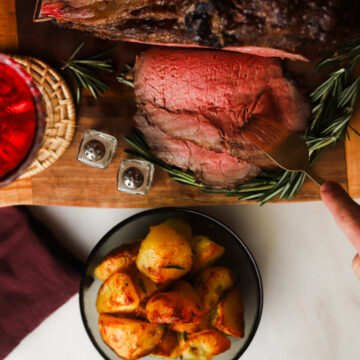
How to Cook Prime Rib
Learning how to cook prime rib isn't super difficult. And when you've mastered it, you've got one of the most delicious meals around. It's succulent, juicy, tender, and so full of flavor, it's hard not to love. This makes the perfect centerpiece for any special occasion!
Equipment
- Roasting pan with rack
- Instant-read thermometer
Ingredients
- 1 5 lb prime rib roast bone-in
- 2 tbps salt
- 1 teaspoon pepper
- 2 tablespoon olive oil
Instructions
Method One: Reverse Sear
- Salt and pepper the roast generously. If you can, dry-brine it in the fridge overnight.
- Heat oven to 225°F. Place the roast bone-side down on a rack. Use a thermometer periodically to check temperature. Roast until the internal temperature reaches 115–120°F for rare or 120–125°F for medium-rare. Expect about 30–35 minutes per pound.
- Remove the roast and let it rest for 30 minutes.
- Heat oven to 500°F.
- Heat oven to 500°F. Add roast and sear for 10–15 minutes until the crust turns deep golden.
- Rest for 10 minutes before slicing and serving.
Method 2: Classic Roast
- Pat the roast dry. Season generously.
- Heat oven to 500°F. Roast the prime rib for 15 minutes to build the crust.
- Lower the oven to 225°F. Continue roasting for 15–20 minutes per pound. Pull the roast at 120°F for medium-rare. Be sure to check on it using your thermometer. Heat can vary from oven to oven - this is the only way you can be sure.
- Let it rest for at least 20 minutes before slicing.
Notes
Cooking time depends on size: See the many charts and time tables in on this page for more details, but general guidelines are given in the recipe card.
Bring it to room temp: Take the roast out of the fridge about an hour before cooking. This helps it cook evenly.
Dry the surface: A dry roast browns better. Pat it dry or chill it uncovered overnight.
Season early: Salt the roast the night before if you can. It adds flavor and builds a better crust.
Use a thermometer: It’s the only reliable way to know when it’s done. Don’t trust time alone.
Pull early: Always pull the roast 5–10°F before the final temperature you want. Carryover heat does the rest.
Rest after cooking: Resting keeps the juices inside the meat. Don’t skip it.
Reverse sear needs two rests: One after the low cook. One (short one) after the final sear.
Rack helps: Roast on a rack or bone-side down so the bottom doesn’t steam.
Don’t overcrowd the oven: Good airflow helps the roast cook evenly.
Skip marinades: They make the surface wet and stop the crust from forming. Dry rubs are great though!
Check oven accuracy: Many ovens run hot or cold. A cheap oven thermometer helps a lot (note - this changed the game for me. My oven was running about 30 degrees too hot. This lead to many disasters).
Nutrition
Serving: 200gCalories: 64kcalCarbohydrates: 0.3gProtein: 0.1gFat: 7gSaturated Fat: 1gPolyunsaturated Fat: 1gMonounsaturated Fat: 5gCholesterol: 0.2mgSodium: 2865mgPotassium: 8mgFiber: 0.1gSugar: 0.003gVitamin A: 3IUCalcium: 4mgIron: 0.1mg
Tried this recipe?Let us know how it was!